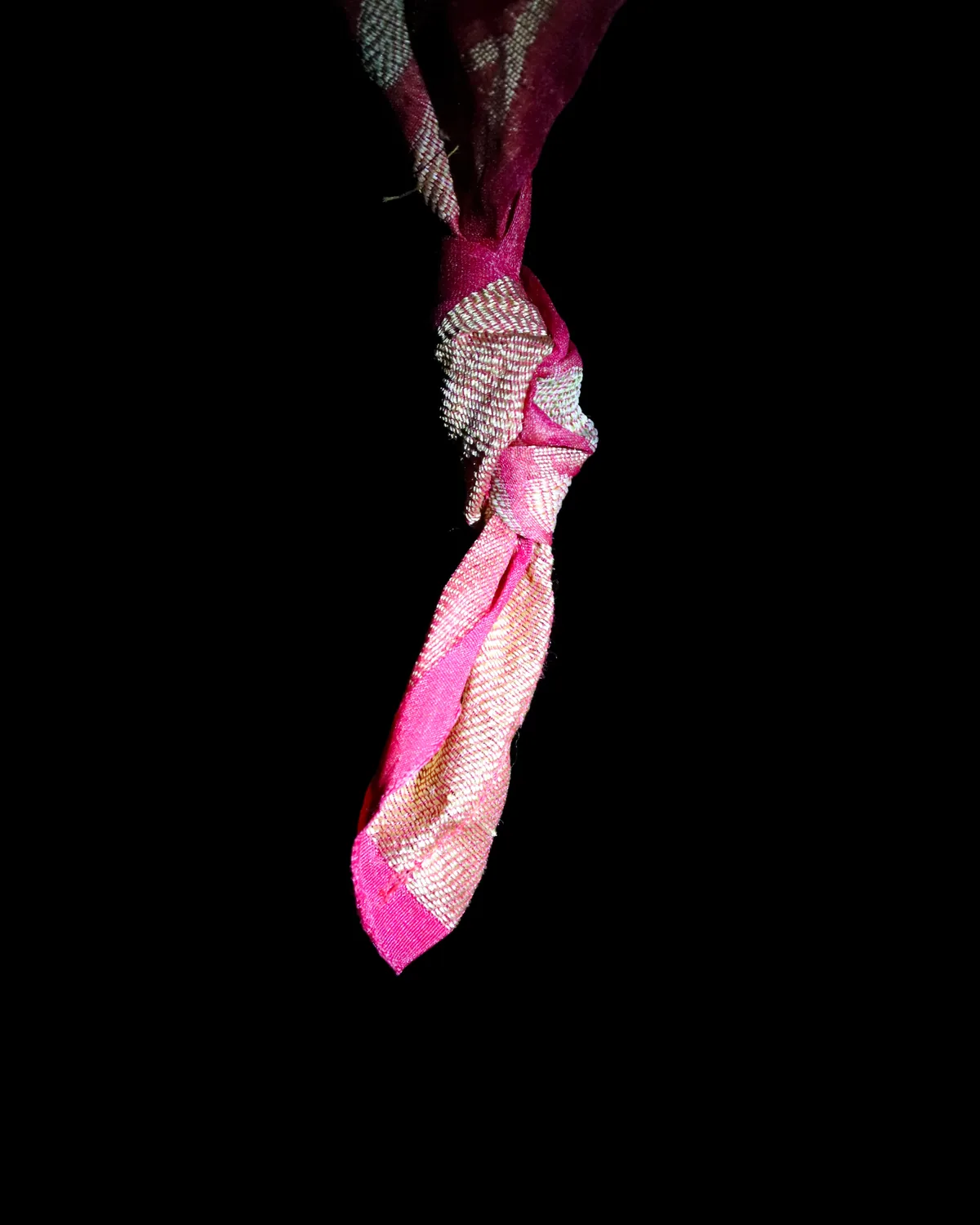
Almost nothing in a Bagru or Bagh print is the colour it was when it went on the cloth. The dyes are built in place, out of three cheap and ancient ingredients.
Harda comes first — myrobalan, a fruit, ground and steeped. The cloth is soaked in it and dried, which puts a tannin through the whole fibre and gives Bagru its buff ground rather than a bleached white one. Nothing is printed yet.
Then iron: filings left to ferment with jaggery until they make a black liquid. Printed onto harda-treated cloth, it turns a permanent grey-black. Alum does the other half — invisible when it goes on, then red or madder once the cloth is boiled with the dye.
This is why the washing matters as much as the printing, and why a Bagh print is taken to running water and then laid in the sun. The pattern is finished by chemistry hours after the printer has gone home.