Telling a handloom Kota from a powerloom one
Count the squares. They should disagree with each other.
30 June 2026
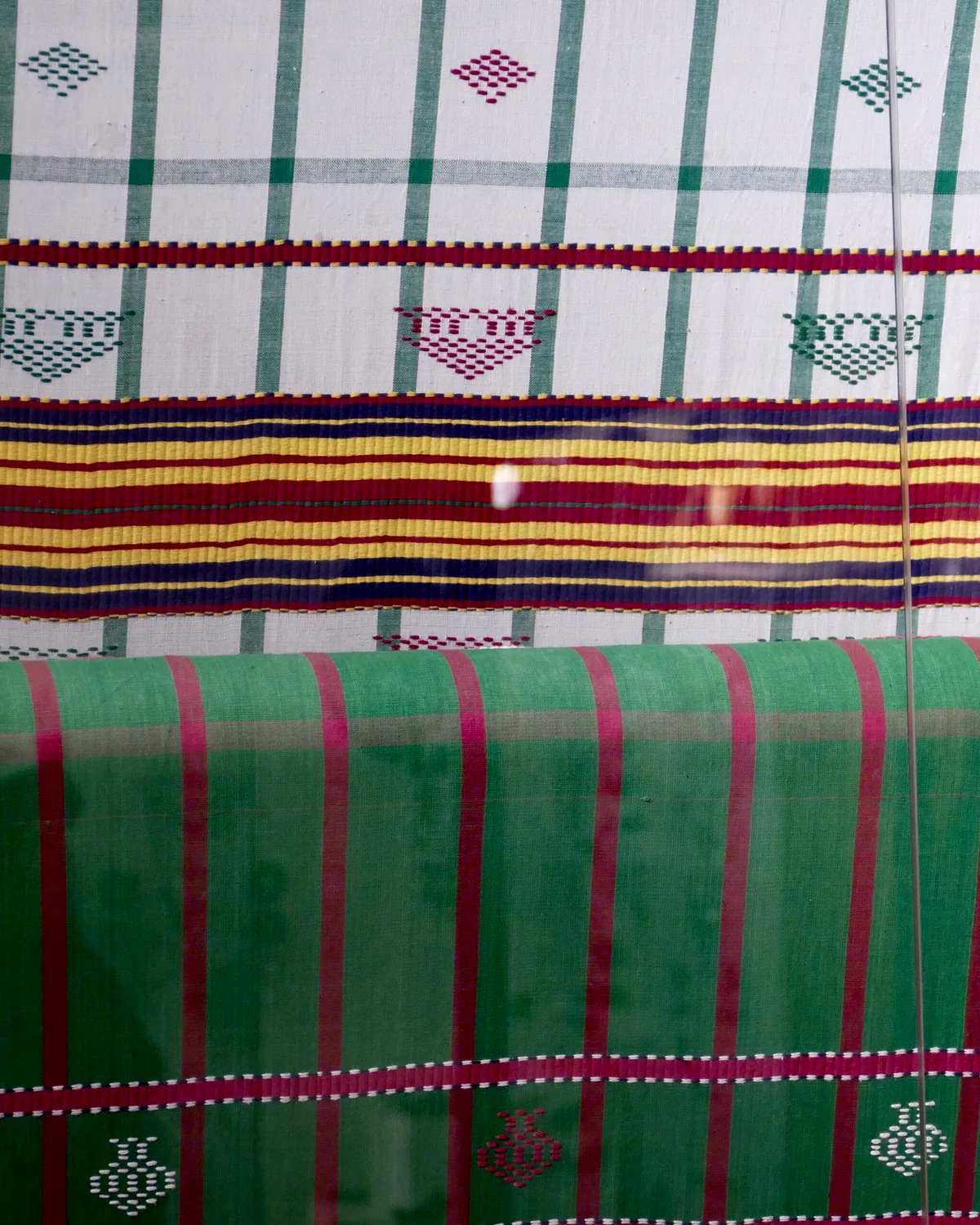
Kota doria is built from a square check called khat — cotton and silk threads alternated so the cloth stays open and almost transparent. On a handloom, the weaver counts threads to keep the check even, and does it a few thousand times.
Human counting drifts. Hold a handloom Kota to the light and the squares are near-identical but not identical: a row slightly wider here, a thread doubled there. A powerloom does not drift. Its squares are perfect, repeating, and dead.
The second tell is the selvedge. A handwoven edge is firm but never machine-straight, and there are usually small knots where a broken warp thread was tied back in. Those knots are not damage. They are evidence.
The third is weight, and it is the least reliable, so use it last. Handloom Kota tends to feel drier and more papery in the hand than the powerloom copy, which has a slight plastic smoothness from the sizing.