01
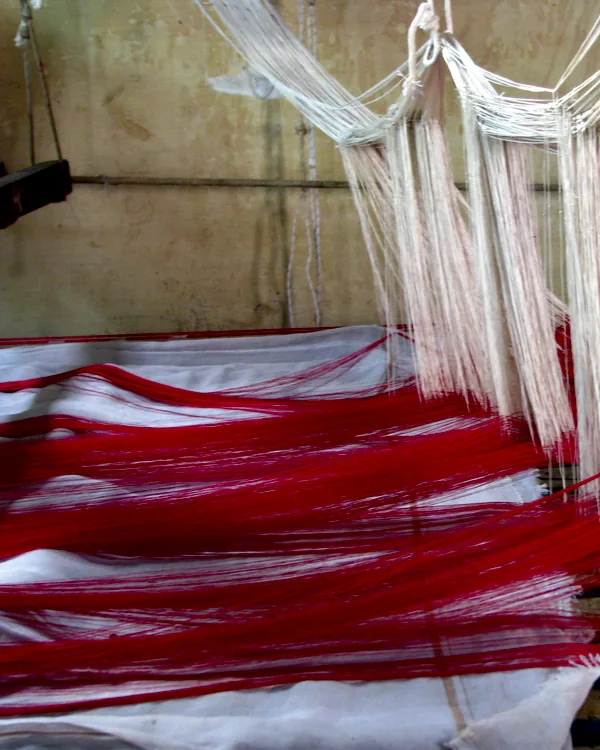
The yarn is chosen
Cotton for Kota and tant, mulberry silk for Kanchipuram, and for Chanderi and Maheshwari both at once — silk in the warp, cotton in the weft. The mix is what decides how the finished cloth falls.
How it is made
Six stages between a bale of yarn and something you can wear. None of them is quick, and the slow ones are where the difference lives.
01
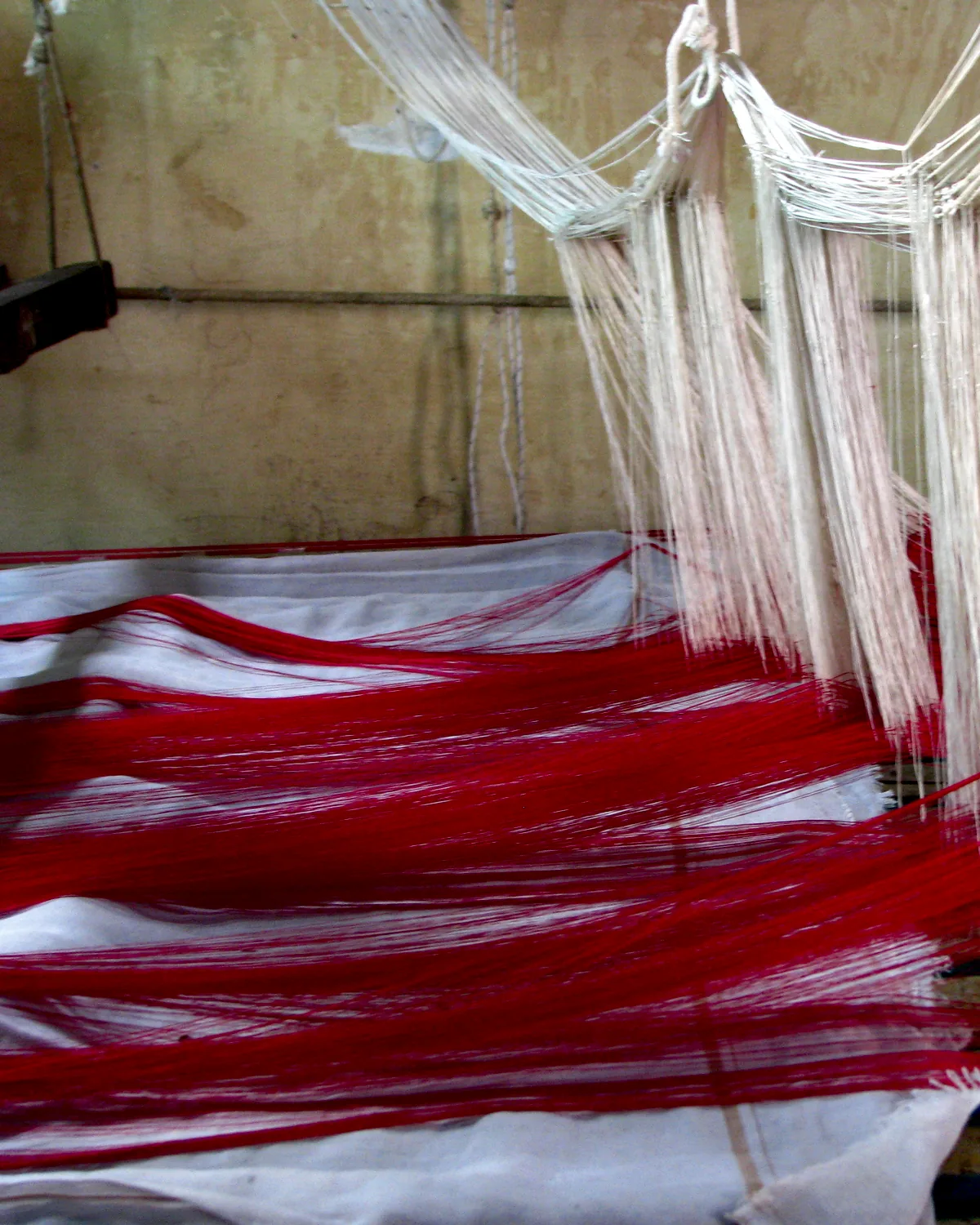
Cotton for Kota and tant, mulberry silk for Kanchipuram, and for Chanderi and Maheshwari both at once — silk in the warp, cotton in the weft. The mix is what decides how the finished cloth falls.
02
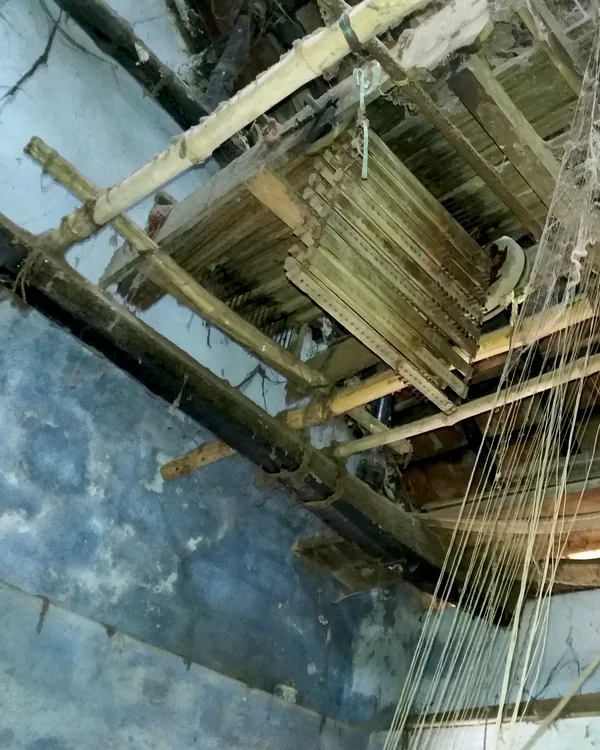
Several thousand threads are wound, sized and drawn one at a time through the heddles and the reed. Dressing a loom takes days and produces nothing you can sell; it is the single most skilled thing in the room.
03
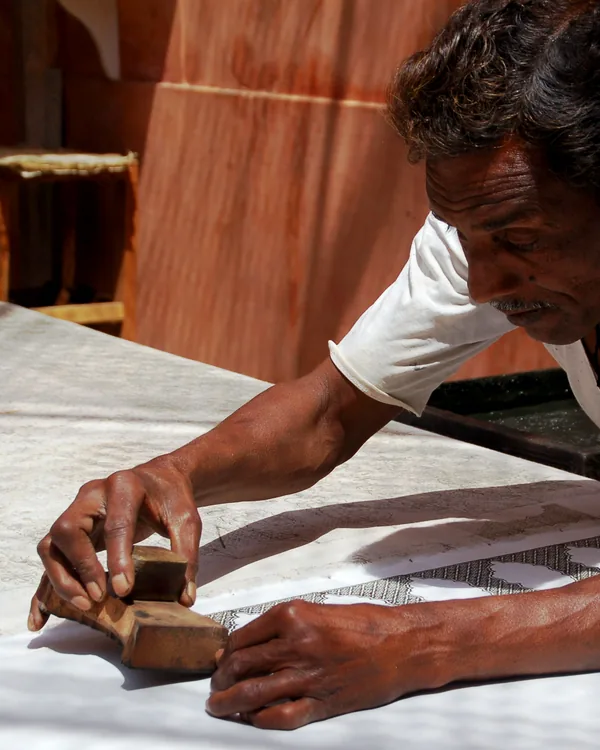
For ikat the threads are tied and dyed before weaving, so the pattern exists in the yarn. For Bagru the cloth is steeped in harda — myrobalan — so the mordant is inside the fibre before a block ever lands on it.
04
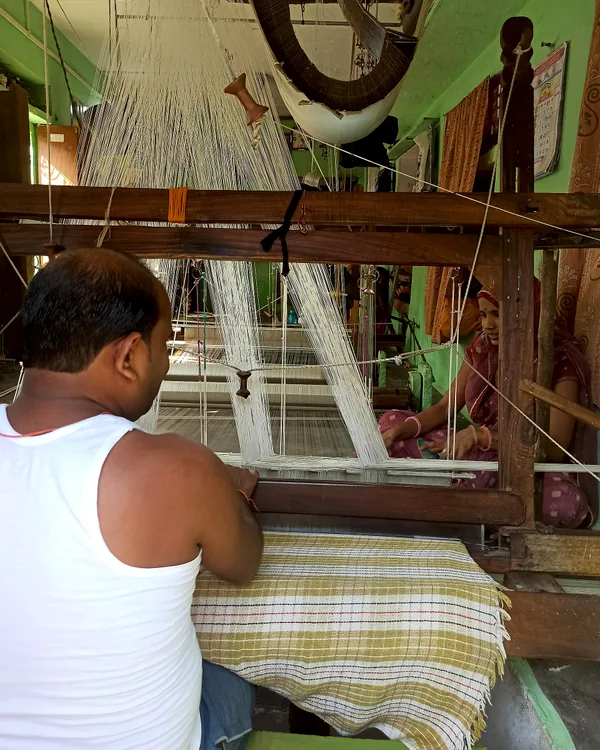
One throw of the shuttle is one pick. A plain cotton sari is tens of thousands of them. A Kanchipuram is woven on three shuttles at once, the border and the body locked together as they go.
05
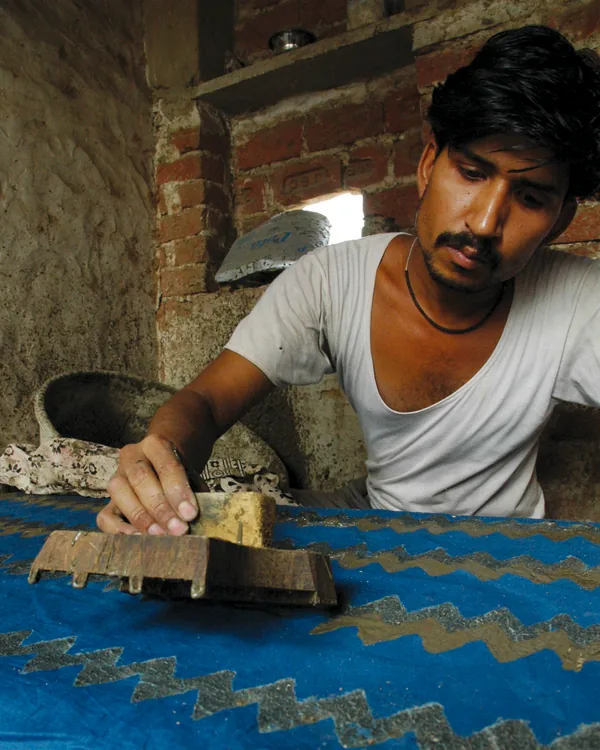
A carved block, a tray of dye, a padded table thirty feet long. The printer walks the repeat down the cloth by eye. Where two impressions meet slightly out of step, that is the register — and that is the tell.
06
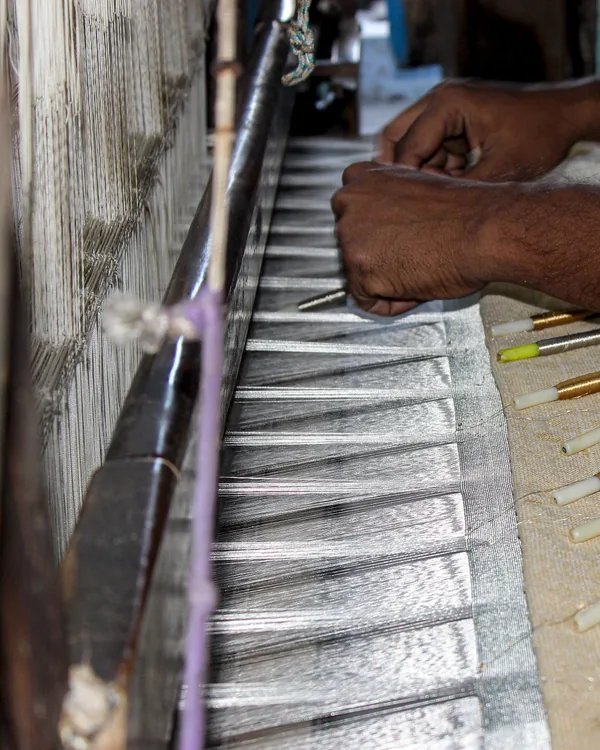
Bagh is printed with iron filings and alum, then washed in running water and dried in the sun, and only then are the colours what they are meant to be. Half of that craft happens after the printing stops.
And then it is ours
Twice a year, at the cluster. It is the only way the sentences on the weave pages can be written honestly — and the reason one of them admits we could not do it.